
How to Choose a Restoration Company in Charlotte, NC
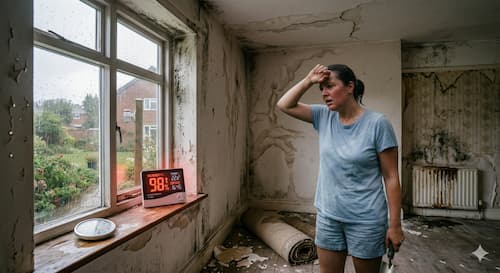
Water is in your basement, smoke is in your living room, or mold is behind your bedroom wall. You Google “restoration company Charlotte NC” and 200 results show up. Some are big franchises, some are local crews, some are out-of-state storm chasers who showed up after the last hurricane. Picking wrong adds thousands to your final bill and weeks to your timeline. This guide walks through how to pick the right Charlotte restoration company on the first call.
Key Takeaways
- ›IICRC certification is the industry baseline. Anyone without it should not be on your shortlist.
- ›For jobs over $30,000, NC requires a general contractor license. Verify it with the NC Licensing Board before signing.
- ›Direct insurance billing and a written cause-of-loss letter are the two single biggest factors in fast claim resolution.
Start With the Non-Negotiables
IICRC Certification
The Institute of Inspection Cleaning and Restoration Certification (IICRC) sets the standard for the industry. Real restoration companies hold S500 (water damage), S520 (mold), S540 (trauma scene) certifications. If a Charlotte company cannot show you their certification number, walk away.
NC General Contractor License (Jobs $30K+)
Per NC DOI regulations, restoration projects over $30,000 require an NC general contractor license. Look up the license number at the NC Licensing Board for General Contractors. No license = no work over the threshold = legal exposure for you.
Active Insurance and Bonding
Verify general liability ($1M minimum), workers comp (required if employees onsite), and pollution coverage (mandatory for mold and trauma work). Ask for a certificate of insurance naming you as additional insured for the project duration.
7 Questions to Ask Before Signing
These questions separate real Charlotte restoration companies from the fly-by-night operators that show up after every storm.
1. What is your average response time in Charlotte?
Local crews can be onsite in 60-90 minutes anywhere in Charlotte, Matthews, Mint Hill, Pineville, Concord. Companies promising same-day or next-day are dispatching from out of town and will lose the speed-to-mitigation cost reduction that drives 40-60% of total project savings.
2. Will you provide a written cause-of-loss letter?
This document is what your insurance adjuster needs to approve a claim. It should describe the source of damage (burst pipe, roof leak, hurricane wind), the affected materials, and the recommended scope. Verbal explanations get denied. Written ones get paid.
3. Do you bill insurance directly?
Direct billing keeps money out of your pocket and accelerates the work. Companies that demand cash upfront and tell you to “deal with the insurance company yourself” are a major red flag — usually storm-chaser crews trying to get paid before the claim is denied.
4. Can you handle both mitigation AND reconstruction?
Mitigation = drying, cleanup, demolition. Reconstruction = rebuilding what was demoed. Single-contractor jobs run faster (no contractor handoff delay) but limit your reconstruction quality. Two-contractor jobs let you pick a specialist for the build but add 1-3 weeks of coordination. Get clear on which model the company offers.
5. What is your written warranty?
Mitigation should carry a 12-month warranty against secondary mold or microbial regrowth. Reconstruction should carry 1-2 year labor + 5-10 year material warranties. Anything less is sub-standard for the Charlotte market.
6. Can you provide 3 recent Charlotte references?
Real local companies have current references they can email you within an hour. Storm chasers cannot — they have no local track record. Cross-check references against BBB profiles and Google reviews to catch fake testimonials.
7. What is your change-order policy?
Restoration jobs almost always uncover hidden damage once walls open up. Reputable companies issue written change orders with itemized pricing for your approval before doing additional work. Avoid contractors who say “we will figure it out” mid-job — that is how a $5,000 estimate becomes $15,000.
Charlotte Storm-Chaser Red Flags
After every hurricane or severe storm, out-of-state contractors descend on the Carolinas. Many disappear with deposits and leave homeowners with half-finished work. Watch for these warning signs.
- Out-of-state license plates on the company truck — local companies have NC plates.
- Door-to-door solicitation — legitimate restoration companies do not knock on doors.
- Demands for cash deposits over 10 percent before any work — standard is 0-10% for residential restoration.
- No physical office address in NC — verify location on Google Maps and via NC Secretary of State business registration.
- Pressure to sign immediately — “this rate is only good today” is a scam tactic.
- Insurance assignment-of-benefits forms — never sign one. These transfer your claim rights to the contractor and limit your control over the work.
Direct Billing vs Pay-Then-Reimburse
Two payment models exist. Direct billing means the contractor invoices your insurance company directly, you only pay your deductible. Pay-then-reimburse means you pay the contractor in full, then submit receipts to insurance. Direct billing is dramatically better for cash flow — pick it whenever available.
For Charlotte homeowners with $1,000+ deductibles, direct billing also gives the contractor incentive to maximize the claim approval (their payment depends on it) — your interests align.
BBB and Online Review Filtering
Check BBB for accreditation status and complaint history. Look at Google reviews for volume (50+ reviews), recency (recent reviews from last 6 months), and detail (specific job descriptions vs generic praise). Filter out 5-star reviews that look templated and 1-star reviews that look like personal vendettas — focus on the 3-4 star reviews for the most honest picture.
Frequently Asked Questions
Ready to Talk to a Real Charlotte Restoration Team?
Get at least three written bids from IICRC-certified, NC-licensed contractors. Ask the 7 questions above. Verify references. All Brothers Restoration has been serving Charlotte and the broader Carolinas region with IICRC-certified water, fire, and mold restoration plus full direct insurance billing. Visit our Charlotte water damage restoration page to schedule a free assessment.
Leave a Reply