
Risks of Water Damage to Your Ceiling or Floor | All Brothers Restoration
Structural Integrity: Can Water Damage Make Your Ceiling or Floor Collapse?
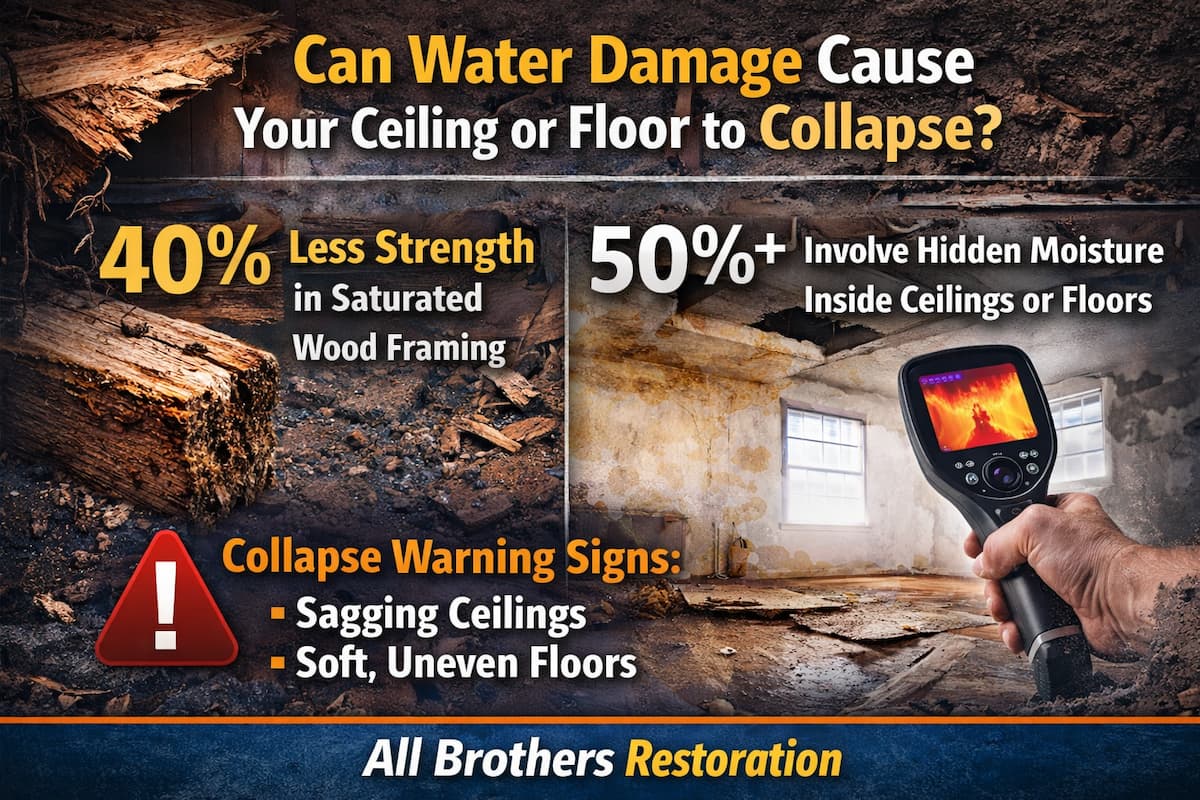
Water damage is not just a cosmetic issue. It can compromise the safety of your home. According to a study on building safety, when wood framing is continuously exposed to moisture, its load-bearing capacity can decrease by up to 40%. In fact, according to a report published by the restoration industry, more than 50% of all cases of structural water damage have concealed moisture located within the ceiling or beneath the subfloor, which can weaken these materials well before any visible warning signs appear.
High Point, NC, homeowners who have had a hidden leak or flooding will eventually see their attic or basement’s ceiling, drywall, joists, and other structural elements become compromised due to prolonged exposure to moisture. When materials remain in a state of saturation, they can swell, rot, and fail, potentially causing dangerous ceiling collapses or structural floor instability.
In this case, taking immediate action by contacting a professional who specializes in Water Damage Restoration High Point, NC services is crucial. These professionals can identify concealed moisture, stabilize damaged materials, and prevent minor leaks from escalating into structural hazards.
How Water Damage Affects Structural Integrity
Water intrusion can have an effect that goes far beyond drywall and paint. Materials that support structural elements of homes, including walls, floors, and ceilings, can deteriorate very rapidly when they are exposed to prolonged moisture.
-
How Moisture Weakens Building Materials
The majority of buildings that are built for residential use utilize a combination of wood framing, insulation, drywall, etc. These materials readily absorb moisture, especially if they are exposed to leaking pipes, roofs, or flooding. When wood fibers have been soaked (saturated), their structure loses strength and begins to expand in size (swell).
The bonds between the fibers within the structural components deteriorate over time. When they do, the structural members may twist out of place, causing deformation; you may also see cracks appear when load is applied normally.
-
Water Damage Hidden from Viewing Surfaces
The major problem with water damage is that it frequently occurs hidden from plain view. Moisture can build up in ceilings and under floors without any visible indications.
Professional Water Damage Clean-Up Services in High Point, NC, utilize specialized moisture detection equipment to locate hidden areas of moisture before they harm the structural components of any structure.
Water Damage Can Cause Ceiling Collapse
Yes, catastrophic water damage can lead to ceiling failure when not remedied promptly.
-
The Weight of Water Saturation and Ceilings
Ceilings are made from drywall sheets fastened to wood joists (hardwood will shrink when it dries out) or wood frame members. When there is a water leak running from above the ceiling, or there is flooding from rainwater, the drywall will absorb the moisture and saponify (become like a sponge).
As the drywall absorbs more moisture, the weight from the moisture increases, and the added weight reduces the strength of the drywall. Ultimately, the added weight could exceed what the fasteners and framing can support.
-
Signs of Potential Ceiling Collapse
Prior to a ceiling collapse, a ceiling will typically show several warning signs indicating that it is structurally stressed; examples include excessive droop or sagging drywall, water spots on the ceiling or walls below, paint bubbles, or cracks.
These warning signs need to be responded to immediately by a company specializing in Water Damage Restoration Highpoint, NC, to prevent further damage and/or injury.
The Impact of Water Damage on Floor Systems
If water leaks under the top surface of a floor, then it can damage the structure of the floor system.
-
Rotting and Damage to Subflooring
Typically, wood floors are affixed to wooden subflooring, and the subflooring is located beneath wooden joists; there is usually also insulation between the subflooring and joists and between the joists themselves. When water penetrates through the floor covering, the subflooring will become wet and may remain wet for an extended period of time.
As the amount of time that wood remains wet increases, the likelihood that it will rot, develop mold, and begin to deteriorate increases. Once the subfloor is rotten and compromised, the finished floor may appear to be spongy or unsteady.
-
Joists May Be Compromised Due to Structural Stress
In extreme cases of water damage, the joists supporting the flooring system may also be compromised. The joists provide structural support for the entire contents of a house, including people, furniture, and appliances.
When joists become weak due to a combination of rotting and mold growth, they can sag, and the flooring may eventually fail as a result of any of the previously mentioned conditions. Early intervention with a company that specializes in Water Damage Repair in High Point, NC can decrease the likelihood that any of these structural failures will occur.
Main Sources of Structural Water Damage to Homes in High Point, NC
There are four primary means by which water can enter a house and cause structural damage.
-
Plumbing Failures
Plumbing failures are one of the primary causes of structural water damage. Plumbing failures can include broken pipes, leaking appliances, and leaking plumbing fixtures, such as pipes behind walls.
Undetected or unrepaired plumbing leaks allow framing and underlayment to deteriorate.
-
Roof Leaks and Storm Damage
Historically, High Point, NC, experiences seasonal rain patterns that can cause significant roof damage. Whenever a roof leaks because of inadequate shingles or flashing, rain that leaks through the roof will enter the attic area and/or the ceiling cavity of the house. Once water seeps into a building, it spreads through the insulation, framing, and drywall, creating structural problems unless taken care of quickly.
Flooding from excessive rain or improper drainage can allow groundwater into a basement or crawlspace. When floodwater enters a structure, the water is almost always contaminated and can cause damage to materials faster than clean water.
Using a professional water damage restoration near me service to help repair flood-damaged property and keep the structural parts of the house sound is important.
-
Mold Grows on Organic Material
Mold likes to grow in damp places and thrives on organic material (wood, drywall, and insulation). Mold will start to form colonies and then begin to consume and destroy everything it attaches to.
Mold causes the continued breakdown of material over time and weakens and deteriorates structural components.
-
Mold Growth Will Spread Quickly
Mold growth can start within 24 to 48 hours of moisture entering a building, and if moisture in ceilings or floors is contained to those areas, it will continue to spread to the rest of the materials in the building.
Professional water damage restoration is responsible for removing moisture and applying antimicrobial protection to prevent mold damage from deteriorating the structure.
Why Water Damage Restoration Needs to Be Done as Soon as Possible
The longer that water-damaged materials are left untreated, the greater the risk to the building’s structural stability.
-
Preventing Structural Failure
Rapid extraction and removal of water helps keep building materials from reaching saturation and losing their strength. Restoration professionals use commercial-grade water extraction equipment to remove moisture from structural areas before those areas are further damaged.
The longer you delay responding to water damage, the more unnecessary costs may arise from replacing ceilings, floors, or framing components of the house.
When a building is water-damaged, the air quality inside is also affected due to the growth of mold and bacteria, creating an air pollution health risk for occupants. A professional restoration company will remove the moisture and contaminants that degrade air quality to restore the building to a safe and livable indoor environment.
The restoration process to restore integrity to the structure involves a systematic and complete process.
-
Initial Inspection and Moisture Detection
The first step with every restoration job is to conduct an initial structural inspection of the property and determine where the water intrusion began. The next step is to use advanced moisture detection equipment to identify where hidden water may be located inside the walls, ceilings, and/or flooring. This step of the process is essential to ensure that no hidden damage is left unrepaired.
-
Water Extraction and Structural Drying
Once the moisture has been detected, the next step in the restoration process is to begin removing the water using commercial-grade water pumps, air movers, and dehumidifiers. Structural drying techniques will be employed on both visible and hidden structural surfaces. The use of these drying methods will provide stabilization, which will minimize ongoing deterioration.
-
Repair and Restore Structure
Once the structure has been completely dried, the restoration technician will repair or replace all damaged materials. The types of repairs include reinforcing existing framing structures, replacing damaged drywall, and/or installing a new flooring system. The completion of these steps will result in the structure being restored to its original structural safety and integrity so that future long-term and serious issues will be prevented.
Preventing Structural Damage Caused by Water Intrusion
There are many steps that homeowners can take to minimize the likelihood of suffering from structurally damaging water intrusion.
-
Routine Inspections of Plumbing Systems, Roofs, and Drainage Systems
Routine inspection of your plumbing systems, roofing systems, and drainage systems will allow you to identify small leaks or deficiencies before they develop into larger problems that cause serious damage to your residence.
Proper maintenance and cleaning services will extend the life of your building materials.
-
Drainage & Waterproofing
Proper drainage surrounding a home prevents groundwater from seeping into basements or crawlspaces. Water must be directed away from the foundation of the home via gutters and downspouts.
All of these points significantly reduce the risk of structural water-related damage.
-
Timely Response to Water Incidents
Even small leaks need to be acted upon quickly. Locating Water Damage Restoration Near Me and getting in touch with a restoration professional will help stop smaller water issues from becoming structural emergencies.
Taking prompt action will help protect property and people.
Frequently Asked Questions About Water Damage
- Can water damage to a home cause a ceiling to collapse?
Yes. When drywall becomes saturated with large amounts of water, its weight increases and its strength weakens over time. The combination of these factors may cause the ceiling to sag or even collapse if the problem remains unresolved.
- How quickly does water damage to the structure of a home begin to impact floor integrity?
If moisture is contained within the subfloor, structural damage can commence in a matter of days. As time goes on, the breakdown of structural integrity is accelerated by fungus and mold growth.
- What are the indications of water damage to the structure of a residence?
Typical signs of structural water damage include sagging ceilings, soft or uneven flooring, peeling or bubbling paint, drywall stains, and musty odors inside the residence.
- Is it safe to remain in the home with structural water damage?
It can be if the extent of the water damage is minimal. However, a sagging ceiling and/or compromised flooring integrity could pose a danger and should be examined by a qualified professional.
- How do professional restorers detect water damage that may not be readily visible?
Restoration companies utilize thermal imaging cameras, moisture meters, and other specialized devices to locate moisture hidden within the structural cavity of a residence.
Summary: It’s Never Too Late to Call Restoration Professionals
Water damage poses more than an inconvenience; it can result in damage to the life safety of your home. If ceilings and floors are structurally damaged due to moisture, there is no telling when they will fail if the damage remains uncorrected.
Homeowners who respond promptly to water incursions will save significant money in repairing water damage and protect the structural integrity of their homes. Dependable professional restoration companies are trained to locate hidden moisture, dry out damaged materials, and return safe living conditions.
All Brothers Restoration provides professional, trusted restoration services to homeowners who experience water damage, mold damage, and structural damage. With our highly skilled team, we work with each homeowner to help them recover rapidly from leaks, floods, and other unexpected water emergencies.
If you are a property owner looking for a restoration company, contact the trusted and professional team at All Brothers Restoration.