
NC Hurricane Season Storm Damage Prep for Winston-Salem Homes
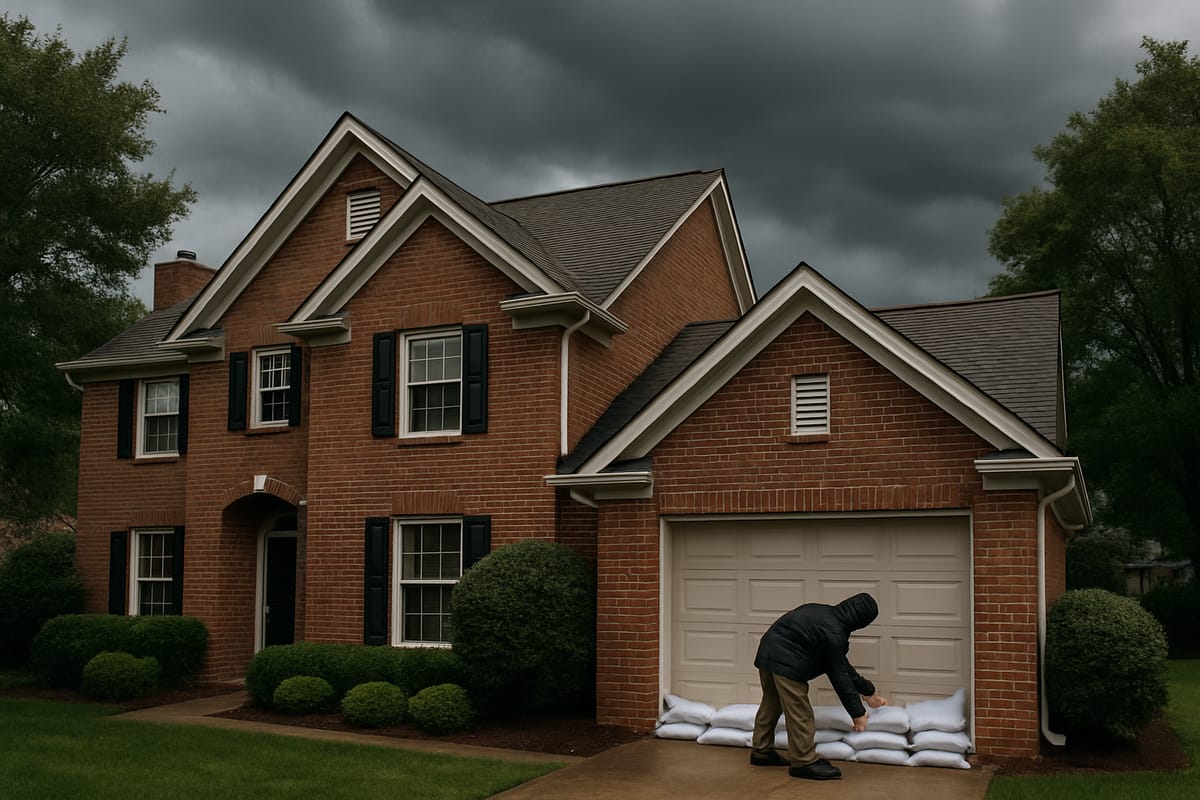
Hurricane season runs June 1 through November 30. September sits in the busiest stretch of it. Most preparation checklists written for North Carolina assume you live near the coast, so they lead with evacuation zones and storm surge. This city sits roughly 200 miles inland. The hazards that reach Forsyth County are different, and so is the hurricane storm prep Winston-Salem homes actually need.
Key Takeaways
- ›Rain, not wind, causes most of the damage the Piedmont sees from tropical systems.
- ›Flood coverage is sold separately and takes 30 days to activate, so buying it mid-storm does nothing.
- ›A weekend of gutter, sump pump and tree work prevents most of what we get called about.
Why Inland Winston-Salem Still Sees Hurricane Damage
Storms weaken as they move inland. Their rain does not.
Rain Travels Farther Than Wind
The National Weather Service notes that flooding from heavy rain is the second leading cause of fatalities from landfalling tropical cyclones. Those rains often cause flooding hundreds of miles inland. The flooding can also persist for several days after the storm itself falls apart. That timeline matters here. Your risk window does not close when the wind dies down.
Saturated Ground Brings Down Trees
Two days of steady rain softens the clay soil across Forsyth County. Root systems lose their grip. A tree that shrugged off 50 mph gusts in July can fall in September on far less wind. Mature hardwoods leaning over a roofline are the ones to watch.
Tornadoes Form Away From the Center
Tropical systems spin up tornadoes in their outer rain bands. Those bands sit well away from the storm’s center. A Piedmont county can get a brief tornado warning while the named storm is still hours to the south. The calls All Brothers Restoration takes here after a tropical system are rarely about wind alone.
Start With the Insurance Step That Has a Deadline
Most checklists say to review your insurance, then move on. That advice is incomplete, and the gap costs people real money.
Standard homeowners policies do not cover flood damage. The Insurance Information Institute confirms that floods are not covered under homeowners and renters policies. A separate flood policy also carries a 30-day waiting period before it takes effect. Buying coverage once a storm appears in the forecast is already too late.
Two more details are worth knowing. About 20 percent of flood claims come from low to moderate risk areas. Roughly 90 percent of natural disasters in the United States involve some form of flooding. An address outside a mapped flood zone is not an exemption.
Photograph every room now, while everything is intact. Store those images and your policy documents somewhere they survive a wet house. A cloud folder costs nothing and cannot warp.
Your Pre-Season Home Checklist
This is the part of hurricane storm prep Winston-Salem homeowners can finish over a single weekend.
Water Entry Points
- Clear gutters and downspouts completely, then run a hose to confirm the flow.
- Extend downspouts at least four feet away from the foundation.
- Test your sump pump by filling the pit until the float trips.
- Confirm crawl space vents are clear and that grading pushes water away from the house.
- Seal gaps where pipes and cables pass through the foundation wall.
Roof, Gutters and Trees
- Walk the perimeter and look for lifted, cracked or missing shingles.
- Reseal flashing around chimneys, vents and skylights.
- Trim limbs that overhang the roof, and take out dead wood entirely.
- Anchor or store propane tanks, grills and patio furniture.
- Check that fence panels and sheds are still fastened down.
Power, Water and Documents
- Keep a full week of prescriptions on hand, not three days.
- Store one gallon of water per person per day for at least three days.
- Run generators outdoors only, well away from windows and doors.
- Put identification, deeds and policies in a waterproof container.
- Keep one battery radio, since cell service drops before power returns.
Learn the Alerts Before You Need Them
Watches and warnings are not interchangeable, and inland counties often get the second one with little fanfare.
A watch means conditions are possible, usually within 48 hours. A warning means they are expected or already happening. For the Piedmont, the flood alerts are the ones that matter most. A Flash Flood Warning means water is rising right now. That is the moment to move vehicles and leave a basement, not the moment to start reading about it.
Sign up for Forsyth County emergency alerts before the season gets busy. Keep a battery or hand-crank radio as the backup. Cell networks get congested quickly, and power can stay out for days after the rain ends.
The 72-Hour Countdown Once a Storm Enters the Forecast
Named storms give the Piedmont more warning than the coast gets. Use it.
72 Hours Out
Fill vehicle gas tanks. Charge every battery and power bank in the house. Move anything valuable off basement floors and out of low cabinets. Refill any prescription due in the next two weeks.
48 Hours Out
Bring in loose yard items. Clear the gutters again if leaves have already started dropping. Photograph the exterior of your home from all four sides. Text those photos to someone outside the area as a backup.
24 Hours Out
Fill bathtubs and clean containers with water. Locate your main water and gas shut-off valves. Park vehicles away from large trees and out of low spots. Charge phones to full and turn the refrigerator to its coldest setting.
After the Storm, Document Before You Clean Up
The instinct is to start hauling wet carpet to the curb. Hold off for twenty minutes and do this first.
Photograph and video everything before you move a single item. Capture the water line against a wall, ceiling stains and every damaged wall cavity. Keep damaged materials bagged in a corner of the garage until an adjuster has seen them. Adjusters work from evidence, and material already at the curb is hard to pay for.
Then move quickly. Standing water can start mold growth within a day or two. That turns a water damage restoration job into a much longer remediation job. If a tree or high wind opened your roof, emergency board-up keeps the next rain band out. All Brothers Restoration keeps board-up crews on call through the season.
Stay Out of the Obvious Hazards
Treat every downed line as live. Do not drive through standing water on a road when you cannot see the bottom. If the power is out, keep generators outside and far from any window or door. Carbon monoxide from a generator run in a garage kills people every hurricane season.
Check on older neighbors once your own house is stable. A cleared driveway and a working phone charger matter more than most people expect.
Frequently Asked Questions
When the Rain Stops, Move Fast
The hurricane storm prep Winston-Salem homes need is unglamorous. Clean gutters, a tested sump pump, trimmed limbs and a flood policy bought months early will outperform any last-minute supply run. Do that work now, while the forecast is still quiet.
When a storm does get through, our Storm Damage Services in Winston-Salem crews handle extraction, drying and board-up on one call. All Brothers Restoration answers 24/7, and the sooner drying starts, the less of your house ends up in a dumpster.