
Top 5 DIY Mold Removal Mistakes High Point Homeowners Make
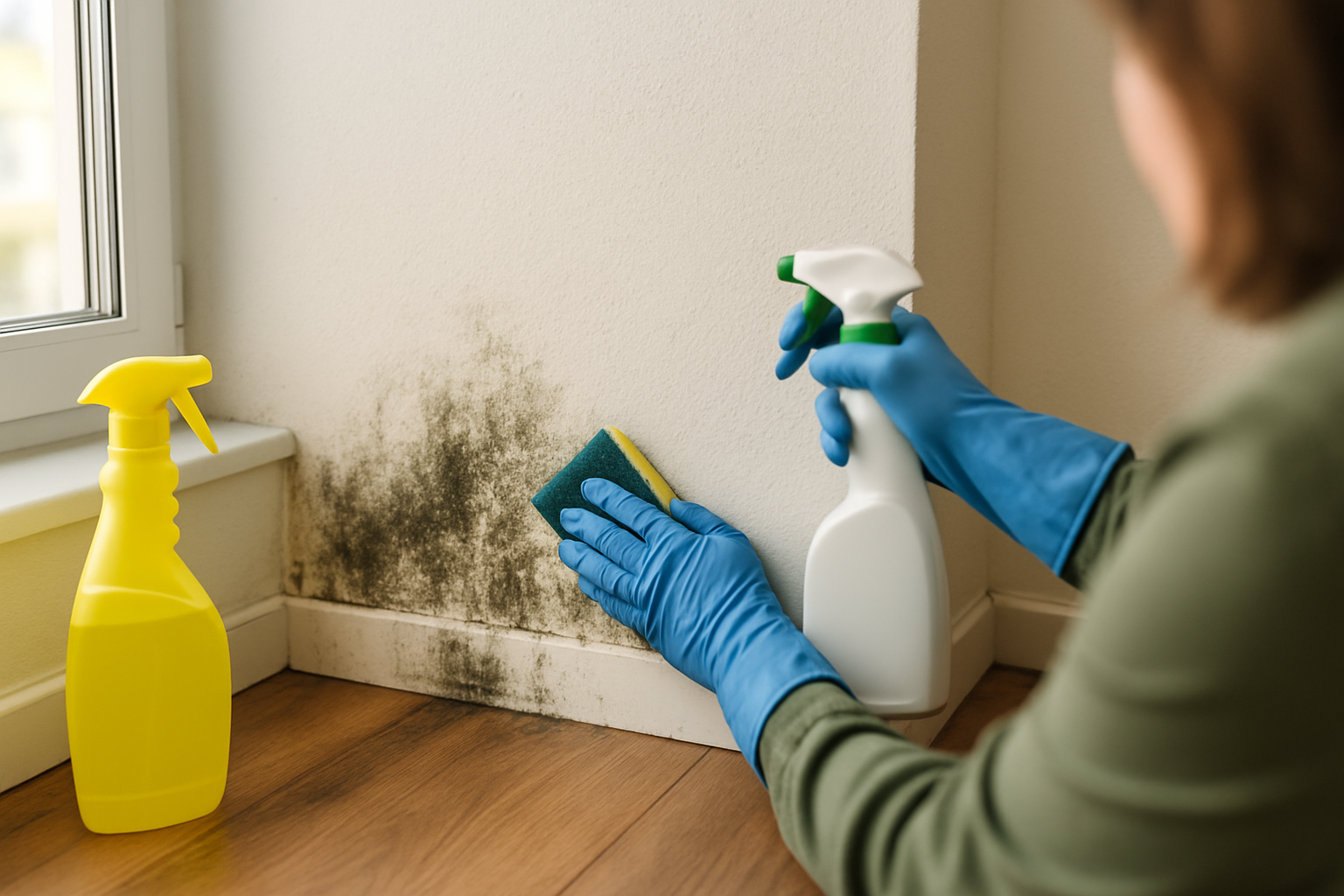
Put the bleach down. It is the first thing most people grab after finding a dark patch behind the washing machine. It is rarely the right call. Mold in a Piedmont home is a moisture problem wearing a stain as a disguise. The five DIY mold mistakes High Point homeowners make most often are below, with what to do instead.
Key Takeaways
- ›Bleach is not recommended as a routine mold treatment, and dead mold still has to be removed.
- ›Mold returns unless the water source is fixed first, because moisture control is the whole game.
- ›Under about 10 square feet you can usually handle it yourself; above that, call a professional.
Why Mold Gets a Head Start in Piedmont Homes
High Point sits in the Piedmont, where summer humidity runs high for months at a time. Many homes here are built over vented crawl spaces, and that space stays damp long after the weather clears. The EPA guidance on mold and moisture is blunt about the cause: mold will not grow without water or moisture. Keep indoor humidity under 60 percent, ideally between 30 and 50 percent, and most growth never starts. Guilford County housing spans several eras, so supply lines, roof flashing and bathroom fans fail at different rates.
Mistake 1: Reaching Straight for the Bleach
Bleach feels decisive because the stain disappears. The EPA does not recommend chlorine bleach as a routine practice during mold cleanup. Porous material is the problem. Bleach is mostly water, and that water soaks into drywall while the chlorine stays on the surface. Dead mold also still causes allergic reactions in some people, so killing it is not enough. It has to come out. Never mix bleach with ammonia or other cleaners either, because the combination can produce toxic fumes. On hard surfaces, detergent and water is the method EPA actually recommends, followed by drying completely.
Mistake 2: Painting or Caulking Over the Stain
Mold-resistant primer sells well for a reason. It promises to end the problem in one coat, and on a ceiling stain it looks like it worked. EPA guidance says not to paint or caulk moldy surfaces, and that paint applied over mold is likely to peel. The growth continues underneath while the room looks finished. Clean the surface and dry it fully before any primer goes on. If the stain returns through fresh paint, the moisture was never fixed.
Mistake 3: Cleaning the Mold and Leaving the Water
This is the one that brings All Brothers Restoration back to the same house twice. Moisture control is the key to mold control, and cleanup is not finished until the water problem is fixed. A scrubbed wall under a still-dripping trap will look identical in three weeks. Find the source first. It is usually a supply line, a roof leak, or a bathroom fan venting into the attic. A crawl space with no working vapor barrier does the same thing. Dry the area within 24 to 48 hours and in most cases mold will not grow at all. That window is why water damage restoration and mold work are really the same job.
Mistake 4: Opening It Up With No Containment and No Mask
Scrubbing and demolition both move spores. EPA guidance warns that pulling wallpaper can release a mass of spores when mold grows on the back. The same applies to cutting drywall or lifting carpet. Seal the room off before anything gets disturbed. Do not run the HVAC system if you suspect mold is inside it. That is how a bathroom problem becomes a whole-house problem. Minimum protection is an N-95 respirator, gloves and goggles without ventilation holes. Those three items cost less than one replaced floor.
Mistake 5: Letting a Test Kit Decide the Scale of the Job
Hardware-store settle plates tell you that spores exist, which was never in question. Spores are in every home, indoors and out, and a petri dish left open will always catch some. What a kit cannot tell you is how far growth has traveled inside a wall or under a subfloor. That is a moisture-mapping question, answered with a meter and a camera rather than a culture. A kit also cannot date the growth, so it will not say whether this started last week or last winter. Skip to the measurement that matters: how much area is affected, and where the water comes from.
How to Tell the Job Is Bigger Than It Looks
Suspect hidden growth when a room smells musty and nothing is visible. The same applies when you know water got in and someone in the house has started reacting. EPA lists the usual hiding places. They include the back of drywall, wallpaper or paneling, and the top of ceiling tiles. Carpet and pad hide it underneath. Add the inside of walls around condensing pipes, wall surfaces behind furniture, ductwork, and roof material above ceiling tiles. None of those are visible from a doorway. Investigating them means disturbing them, which is when spores get released. That is the point where an experienced professional earns the fee.
When DIY Is Reasonable, and When It Is Not
There is a real line here, and the EPA draws it at about 10 square feet. Under roughly a three-foot square patch, most homeowners can handle it with detergent, water and proper protection. Above that, or after significant water damage, EPA's mold cleanup guidance says to bring in someone experienced. Contaminated water changes the answer immediately, and sewage always means a professional. Porous items such as ceiling tiles and carpet often cannot be saved, because growth fills the spaces inside them. If you are weighing the spend, our mold removal cost breakdown breaks down the ranges.
What "Finished" Actually Looks Like
Plenty of DIY jobs stop at the point the wall looks clean. EPA sets four plainer tests. The water or moisture problem has to be completely fixed first. Visible mold and moldy odors should both be gone, though staining may remain and is only cosmetic. A return visit a few weeks later should show no new water damage or growth. Finally, people should be able to use the room again without symptoms or complaints. If a space fails any one of those, the job is still open regardless of how the surface looks.
Keeping It From Coming Back
Prevention here is mostly plumbing and airflow, not chemicals. Clean and repair roof gutters on a schedule, and make sure the ground slopes away from the foundation. Keep air conditioning drip pans clean with the drain lines running freely. Run the bathroom fan during every shower and vent the clothes dryer outside rather than into a crawl space. A humidity meter costs between $10 and $50 at most hardware stores. That makes the 30 to 50 percent target easy to check. Act within 24 to 48 hours on any leak and in most cases mold never gets started.
Frequently Asked Questions
Caught It Early? Stop Before You Scrub
Most DIY mold mistakes High Point homeowners make are recoverable, as long as scrubbing has not spread it. If the patch is bigger than a seat cushion, or it keeps returning in the same spot, stop there. All Brothers Restoration works out of Greensboro and covers the Triad. Our mold removal in High Point, NC crews find the moisture source before anything gets opened up. Call (336) 646-3594 and describe what you are seeing. Catching it early protects both your home and your indoor air.