
Repair vs Replace: Storm-Damaged Roof in Durham, NC
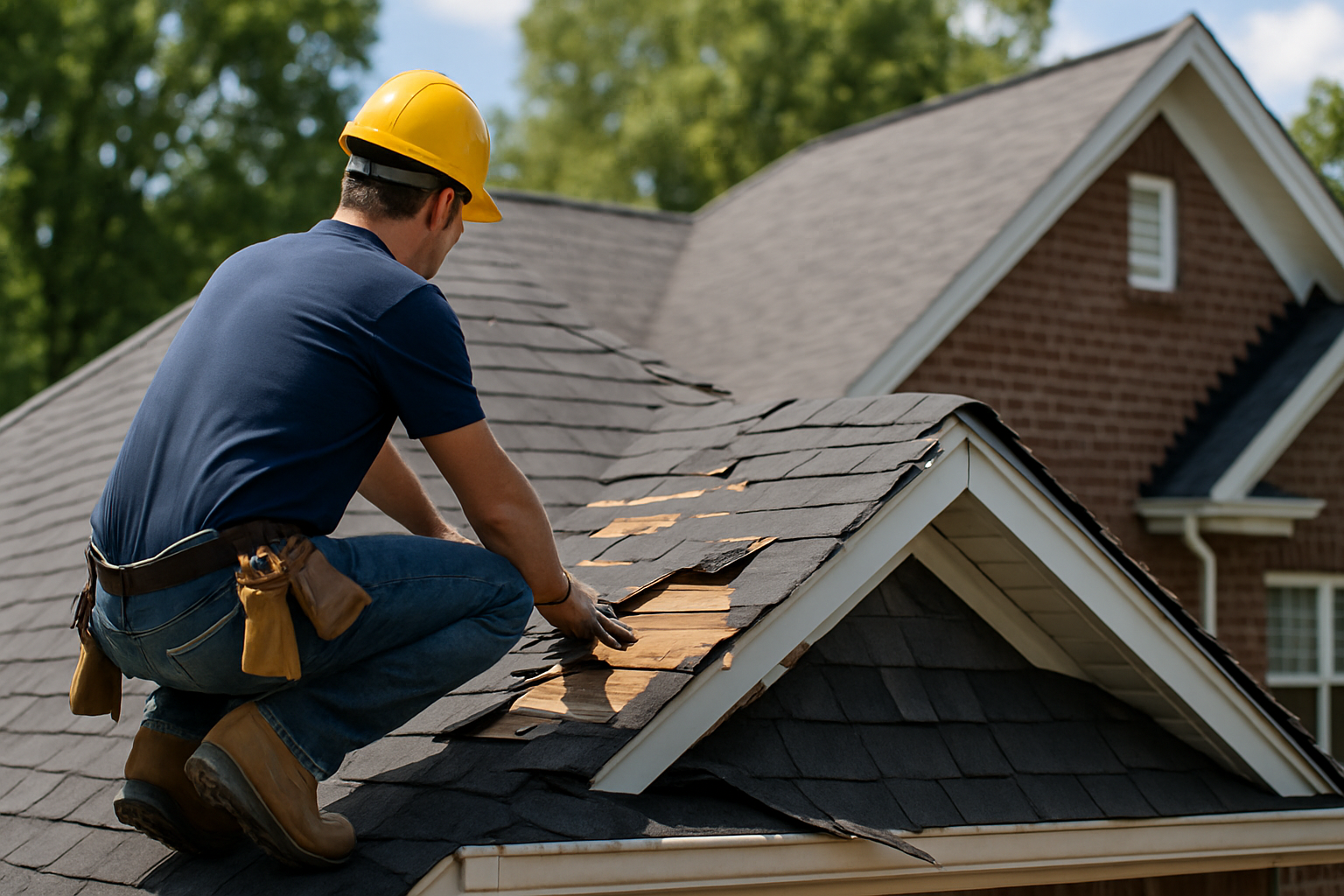
A Durham thunderstorm just dropped golf-ball hail and 60 mph winds on your neighborhood. Your roof has visible damage — missing shingles, dented gutters, maybe a tarp covering a spot the wind ripped open. The next question every Triangle homeowner asks: do I just repair what’s damaged, or is it time to replace the whole roof?
This guide walks through the repair vs replace decision tree for storm-damaged roofs in Durham — the age and damage thresholds that point each direction, the insurance implications, and how Triangle storm patterns factor into making the right call.
Key Takeaways
- ›Damage to less than 30% of roof surface on a roof under 15 years old = usually repair.
- Damage to 30%+ of surface OR roof over 20 years old = usually replace.
- Insurance often pays for full replacement when storm damage exceeds 25% — fighting for this is worth the effort.
Start With Two Key Numbers
Number 1: Roof Age
Asphalt shingle roofs in the Triangle’s climate typically last 18-25 years. Architectural shingles last longer; 3-tab shingles shorter. Find out exactly when your current roof was installed — county records, original purchase docs, or a roofer’s inspection report will tell you. If your roof is under 10 years old, repair is usually right. 10-15 years, it depends on damage scope. 15-20 years, lean toward replacement. Over 20 years, replacement is almost always the right call regardless of damage scope.
Number 2: Damage Percentage
A roofer or insurance adjuster will quantify damage as a percentage of total roof surface. Less than 10% damage on a young roof = simple repair, often a few hundred dollars in materials and labor. 10-30% damage = larger repair, sometimes with insurance involvement. 30-50% damage = grey zone where many roofers and adjusters lean toward replacement. Over 50% damage = replacement, no debate.
When Repair Wins
Localized Damage on a Young Roof
A single section of missing shingles after a microburst on a 6-year-old architectural shingle roof is a repair. The matching shingles are still available, the surrounding shingles have 12-19 years of life left, and repair cost ($300-$1,200) is a fraction of replacement ($8,000-$25,000 for a typical Durham home). Repair preserves the manufacturer’s original warranty on the unaffected sections.
Repair Is Right When…
- Roof is under 15 years old
- Damage is contained to one slope or a defined area
- Matching shingles or materials are available
- Total damage is under 25-30% of roof surface
- Insurance is covering with a deductible you can afford
When Replacement Wins
Old Roof Plus Significant Damage
An 18-year-old roof with 35% storm damage is at the end of life regardless. Spending $4,000-$8,000 to repair sections that will need full replacement within 3-5 years anyway is throwing money away. Replacing now resets the clock and often gets insurance to pay most of the cost since they’re already on the hook for the storm damage portion.
Replacement Is Right When…
- Roof is over 20 years old (regardless of damage scope)
- Damage exceeds 30-50% of surface area
- Multiple slopes are affected
- Matching shingles are no longer manufactured
- Existing roof has prior repair patches or layered shingles
- Insurance is offering replacement value (ACV vs RCV — request RCV)
How Insurance Affects the Decision
North Carolina policies generally fall into two categories for roof claims: Actual Cash Value (ACV) and Replacement Cost Value (RCV). ACV pays depreciated value — a 15-year-old roof might pay 30-40% of replacement cost. RCV pays full replacement cost up front (usually held until work completes). Most modern NC policies are RCV; some older policies and budget carriers are ACV. Check yours.
When damage exceeds 25-30%, many adjusters will approve full replacement under the ‘matching law’ principle — North Carolina requires repairs to result in matched appearance, and if matching shingles aren’t available, full slope (or full roof) replacement may be required. Push back if your adjuster initially approves only spot repairs on a heavily-damaged roof.
Triangle Storm Damage Patterns That Matter
Durham, Raleigh, and surrounding Triangle communities see specific roof-damage patterns by season. Spring (March-May): high-wind events from frontal storms, hail in severe thunderstorms — both common. Summer (June-August): thunderstorms with sustained 50+ mph winds, isolated tornado damage in extreme events. Late summer through fall (August-October): hurricane and tropical storm remnants — usually wind-driven rather than direct hits, but capable of significant roof damage. Winter (December-February): ice and rare snow loads that stress aging roofs.
Hail damage is the trickiest because it’s often invisible from the ground — bruising on shingles that becomes visible leaks years later. A roofer should perform a hail-impact inspection after any severe storm, even if no leaks have appeared yet. NC has a 6-year statute of limitations on hail damage claims; documenting and filing within that window protects your coverage.
Getting an Honest Roofer Assessment
After a storm, expect cold-call roofers. Some are legitimate; many are storm chasers. Ask for: NC contractor license number, general liability + workers’ comp insurance certificates, Durham-area physical address, 3+ recent local references, and a written scope before signing anything. Reputable roofers will quote BOTH repair and replacement options when you’re on the line; refuse to provide both = walk away. Get 2-3 written estimates before committing — variance of 30-50% is normal.
How do I know if my roof has hail damage I can’t see?
Hire a roofer for a hail-impact inspection — they’ll walk the roof and identify bruised shingles (granule loss, soft spots) that won’t leak immediately but reduce lifespan by 5-10 years. NC roofers typically charge $150-$300 for documentation-grade inspections that satisfy insurance adjusters. Catch this within 6 years of the storm to preserve claim rights.
Will insurance pay for a full roof replacement after partial storm damage?
Sometimes — depends on damage percentage, matching availability, and your policy type. Damage over 25-30% with no matching shingles available is the strongest case. Damage under 10% on a young roof almost never qualifies for full replacement. Get a roofer to write the case for full replacement in their scope; adjusters often approve what’s well-documented and pushed back on what isn’t.
How much does roof replacement cost in Durham?
Typical 2,000-2,500 sqft single-story Durham home: $9,000-$18,000 for asphalt shingle replacement. Architectural shingle adds 15-25%. Metal roofing runs $18,000-$30,000+. Tear-off of existing layered shingles adds $1,500-$3,000. Steep pitches, multi-story homes, and complex rooflines add 20-40% to all baselines.
How long does roof replacement take in the Triangle?
Most Durham roof replacements take 1-3 days of active work for a typical residential home. Material delivery and tear-off day 1, installation day 2, cleanup and inspection day 3. Weather delays can push this to a week. Schedule for dry weather windows; reputable roofers won’t install on wet decking.
Storm Damage in the Triangle?
Storm-damaged roofs don’t get better while you decide. Each rain after the initial damage drives water through to interior decking, insulation, and ceiling — turning a $5,000 roof repair into a $15,000 roof + interior restoration job.
Get an honest assessment from a Storm Damage Restoration Durham team that will tell you straight whether your situation is a repair or a replacement, document everything for your insurance carrier, and quote both options if you want comparison. Across Charlotte, Greensboro, Durham, and the Triangle, our crews know NC carriers’ documentation standards and what triggers full-replacement approval vs partial.