
How to File a Water Damage Insurance Claim in North Carolina
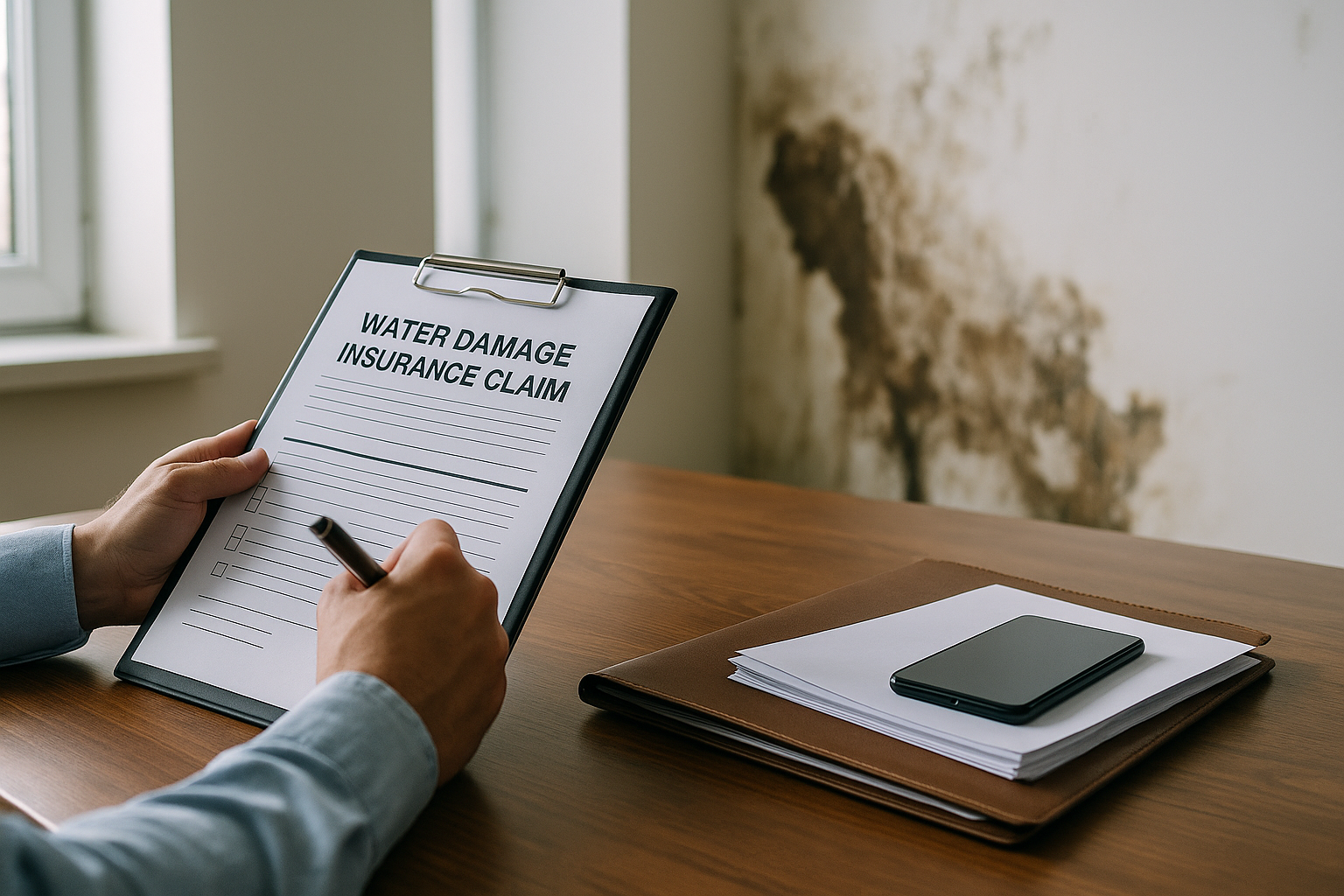
Your North Carolina home took water — burst pipe at 3 a.m., dishwasher hose failure, slow leak found behind a wall. Your first call should be to a restoration company. Your second call needs to be to your insurance carrier. The next question every NC homeowner asks: what does filing a water damage claim actually look like, and how do I make sure I get a fair payout?
This guide walks through the 9-step water damage insurance claim process in North Carolina — what to do in the first 24 hours, what documentation adjusters actually need, the common reasons claims get denied or under-paid, and how to push back when the first offer is low.
Key Takeaways
- ›Open your claim within 24-48 hours — NC policies require prompt notification and late filing can void coverage.
- Document EVERYTHING with timestamped photos and video before any cleanup begins — adjusters often visit days later.
- Sudden and accidental water damage is typically covered; gradual leaks and flood damage are typically NOT — knowing the distinction shapes your claim presentation.
The 9-Step North Carolina Water Damage Claim Process
1. Stop the Source and Document Before You Clean
First action: shut off the water source. Second action: pull out your phone. Photograph every affected room from multiple angles. Video walk-through of the entire damage area. Close-ups of damaged contents (furniture, electronics, clothing). Date-stamp via your phone’s location service. Only AFTER documentation should cleanup begin. Adjusters often arrive 3-7 days after filing; without pre-cleanup photos, they assess what’s left rather than what was damaged.
2. Call Your Insurance Carrier Within 24 Hours
Most NC policies require ‘prompt’ notification, defined in case law as 24-48 hours for most carriers. Late notification gives the carrier grounds to delay or deny. Call the claims number on your policy or insurance card; have your policy number ready. Describe what happened factually — burst pipe, appliance failure, roof leak. Get a claim number before hanging up.
3. Hire a Restoration Company in Parallel
Don’t wait for the adjuster to arrive before starting mitigation. NC policies actually require you to ‘mitigate further damage’ — leaving water sitting can be used to deny part of your claim. Hire an IICRC-certified restoration company within 24 hours of the loss. They’ll handle direct insurance billing in most cases.
4. Keep Receipts for Everything
Save receipts for: emergency repairs, hotel stays if your home is uninhabitable, food spoilage from refrigerator failures, cleaning supplies, temporary moving costs. These fall under ‘additional living expenses’ (ALE) and reimburse separately from structural damage. Lost receipts = lost reimbursement.
5. Meet the Adjuster With Documentation Ready
When the adjuster visits, hand over: timestamped photos, video walk-through, restoration company’s initial scope of work, list of damaged contents with purchase dates and prices, and any receipts already collected. Walk through the damage with them and point out everything — adjusters don’t catch what they don’t see. Take notes on what they say.
6. Get a Written Scope and Estimate
The adjuster produces a scope and estimate, usually 1-2 weeks after the visit. Read it carefully. Common omissions: hidden water in wall cavities not budgeted for, contents not properly valued, drying time underestimated for NC humidity. Your restoration company should review the adjuster’s scope and flag missing items.
7. Negotiate If the Estimate Is Low
Initial offers are often lower than actual repair cost. You have the right to push back. Submit your restoration company’s written estimate as a comparison. Request a re-inspection if items were missed. Provide independent contractor estimates for restoration scope. Document your communications in writing — email creates a record courts and regulators recognize.
8. Decide on Settlement vs Direct Pay-to-Contractor
NC carriers typically offer two payout structures: cash settlement directly to you (you manage repairs yourself), or direct pay to your restoration contractor as work progresses. Direct-to-contractor is usually faster and reduces risk of underspending and pocketing the difference (which is technically insurance fraud). Cash settlement gives you more control but more responsibility for completing repairs.
9. Close the Claim Properly
Once repairs complete, sign closure documents only after verifying all work is finished to your satisfaction. Some NC policies have a ‘right to repair’ provision allowing you to reopen the claim if additional related damage appears within a defined window (usually 1-2 years). Keep all claim documents in cloud storage permanently — water damage claim history affects future premiums.
What’s Covered vs Not Covered in NC
Typically Covered
- Burst pipes (sudden and accidental)
- Appliance failures (dishwasher, washing machine hose, water heater)
- Storm-driven rain through wind-damaged openings
- Sewer backup IF you have the specific endorsement (most NC policies require it as add-on)
- Damage from firefighting efforts
Typically NOT Covered
- Gradual leaks (slow drip under a sink over months)
- Flooding from outside the home (river flooding, hurricane storm surge — requires separate FEMA flood insurance)
- Mold UNLESS it directly resulted from a covered water event (and even then, NC mold coverage typically caps at $5K-$10K)
- Maintenance issues (aged roofing, neglected plumbing)
- Damage from negligence (leaving water running when you knew of a leak)
Common Reasons NC Water Damage Claims Get Denied
- Late notification (filed more than 48-72 hours after the event)
- Damage classified as gradual rather than sudden
- Lack of pre-loss documentation (no proof of property condition before damage)
- Inadequate mitigation (carrier argues you let damage worsen)
- Coverage exclusion (flood damage on a non-flood policy)
- Policy lapse for non-payment around the time of loss
How long do I have to file a water damage claim in North Carolina?
NC requires ‘prompt’ notification — case law generally interprets this as 24-48 hours for most carriers. Some policies specify a hard window (often 7 days). File as soon as possible after the loss; delays beyond 48 hours often trigger pushback or denial.
Will filing a water damage claim raise my homeowners insurance premium?
Yes, typically. NC insurers track water damage claims and most premiums rise 7-15% after a single claim, more for repeat claims. The threshold for filing makes sense when damage exceeds your deductible by a meaningful margin. For losses near your deductible amount, paying out-of-pocket may save money long-term.
Does NC homeowners insurance cover mold remediation after water damage?
Sometimes, with limits. Mold caused by a covered water event (burst pipe, appliance failure) is typically covered up to a policy cap — most NC policies cap mold at $5,000-$10,000. Mold from gradual leaks or humidity issues is usually NOT covered. Endorsements to raise mold limits are available; ask your agent.
What if my insurance company offers less than my restoration estimate?
Negotiate. Provide your restoration company’s written estimate, request a re-inspection, get independent contractor quotes for comparison. If negotiation fails, NC homeowners can file a complaint with the NC Department of Insurance or hire a public adjuster who works on your behalf for a percentage of the additional recovery.
Need NC Water Damage Restoration With Claim Documentation Built In?
Claim outcomes track closely with restoration company quality. The crew that captures moisture readings, photo-documents removal of materials, and writes a detailed scope of work is the crew whose customers get fair payouts. The crew that shows up with consumer fans and a clipboard is the crew whose customers fight for every dollar.
Get a Water Damage Restoration Charlotte team that handles the documentation as part of standard process — timestamped photos, moisture log per location, written scope ready for your adjuster, direct insurance billing if you prefer. Across Charlotte, Greensboro, and the Triad, we work with all major NC carriers and know what documentation each one requires for a clean payout.